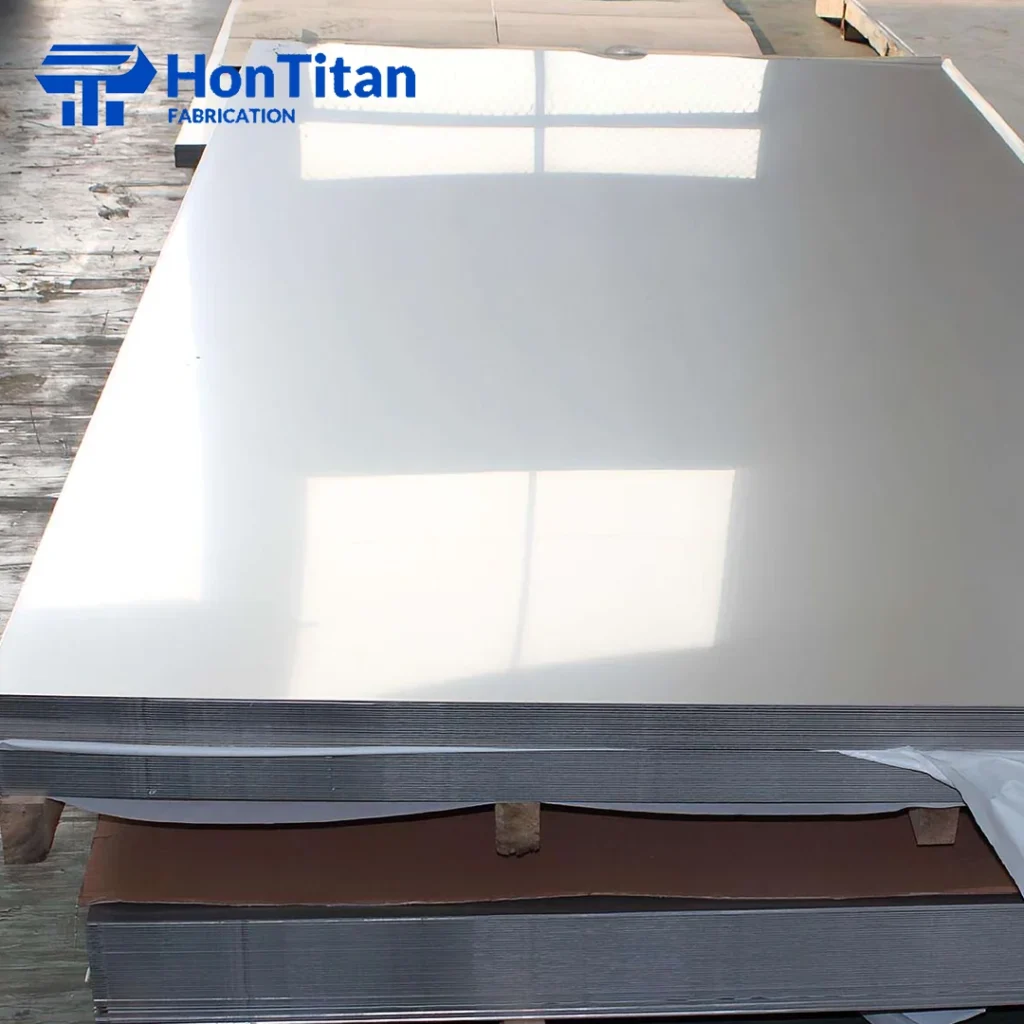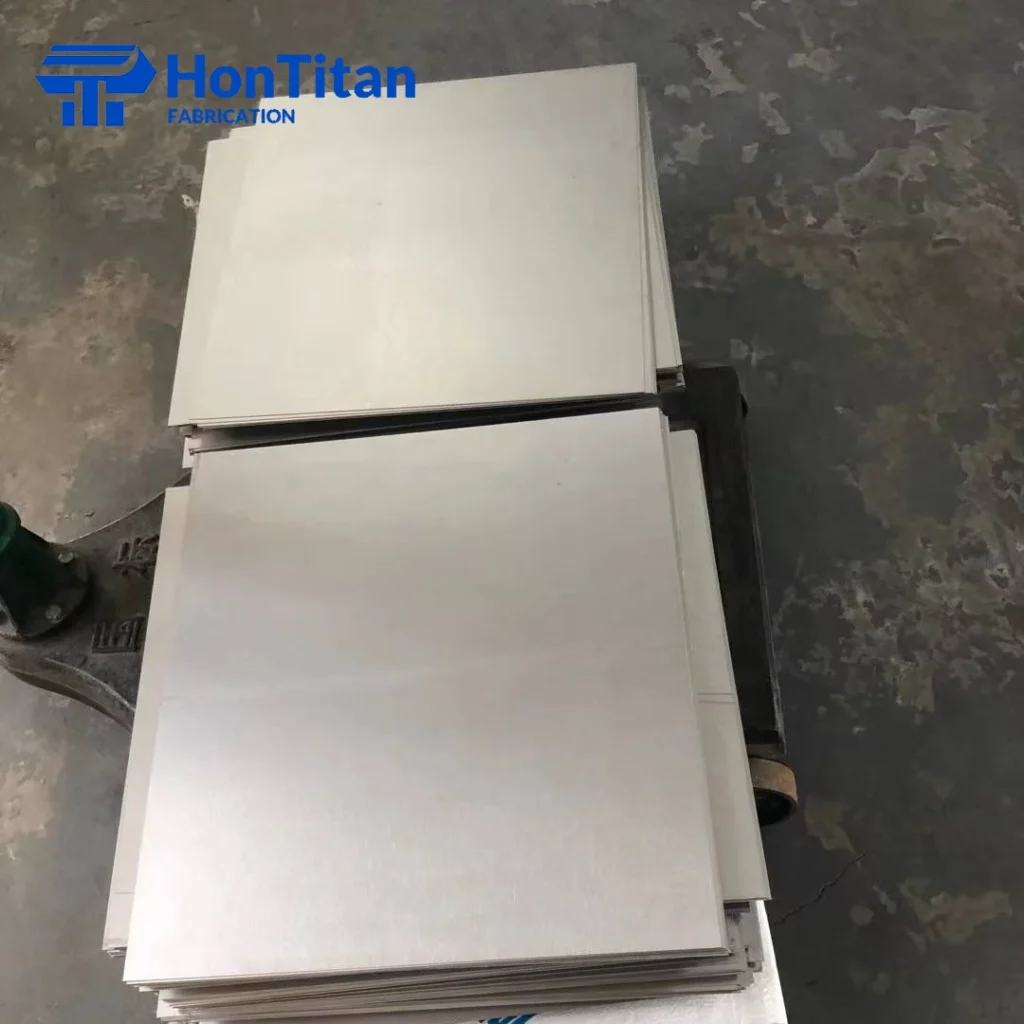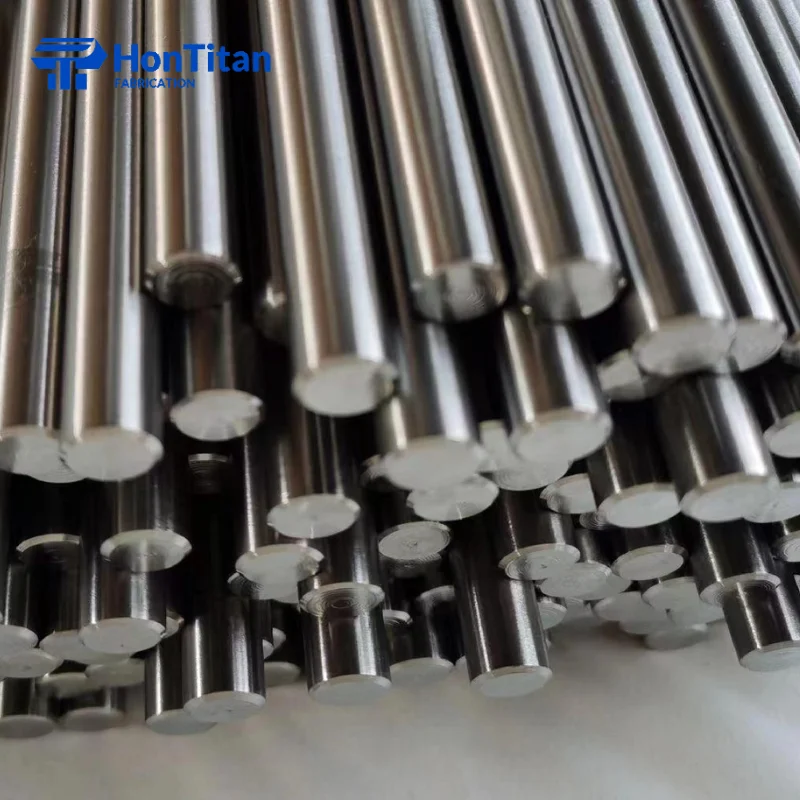
Titanium sheets offer tensile strengths ranging from 240 MPa (Grade 1 CP) to 895 MPa (Grade 5 Ti-6Al-4V) per ASTM B265 minimums, with yield strengths from 170 MPa to 828 MPa depending on grade and heat treatment. At roughly half the density of steel (4.43 vs 7.85 g/cm³), titanium sheets deliver the highest strength-to-weight ratio of any structural metal commonly available in sheet form. The most widely specified grade for high-strength sheet applications is Ti-6Al-4V (Grade 5), with a minimum tensile strength of 895 MPa — but commercially pure grades 1–4 fill critical roles where formability and corrosion resistance matter more than raw strength.
What Makes Titanium Sheets So Strong?
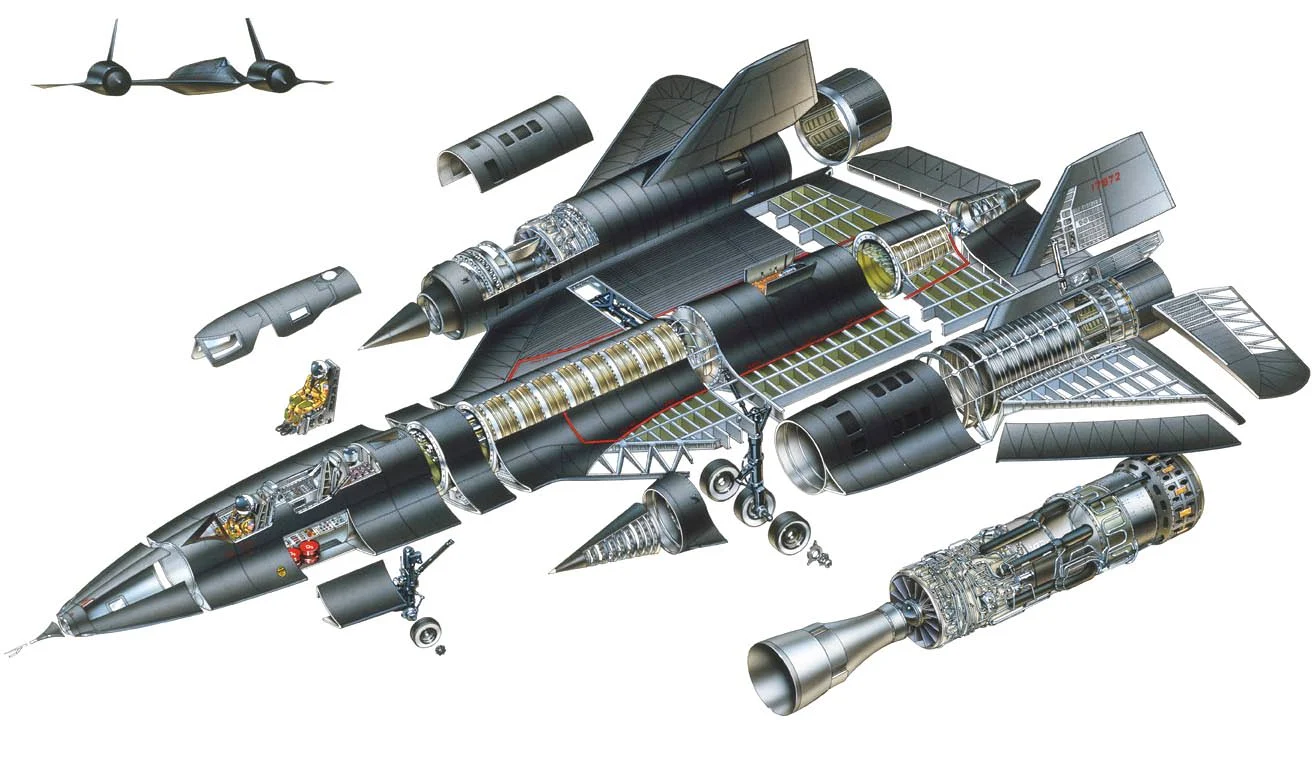
Titanium’s strength comes from its atomic structure — specifically, a close-packed hexagonal crystal lattice combined with a naturally forming oxide layer that protects the underlying metal.
I spent years working with titanium sheet in industrial settings, and the thing that always stood out is that titanium’s strength isn’t just about a single number. It’s the combination of three properties working together: high tensile strength, low density, and excellent fatigue resistance. The result is a material that can handle serious loads without the weight penalty of steel.
The core strength driver in titanium is the ratio of interstitial elements — mainly oxygen, nitrogen, carbon, and iron — trapped in the crystal lattice. More oxygen means higher strength but less ductility. This is exactly why commercially pure (CP) titanium is divided into four grades: Grade 1 has the least oxygen and is the softest; Grade 4 has the most and is the strongest of the CP family.
Alloying elements like aluminum and vanadium take this further. Ti-6Al-4V (Grade 5) contains 6% aluminum and 4% vanadium, which stabilize a dual-phase (alpha-beta) microstructure. This dual-phase structure is what pushes Grade 5 titanium sheets to tensile strengths exceeding 895 MPa (per ASTM B265) while maintaining reasonable ductility.
Complete Titanium Sheet Strength Data: All Grades Compared
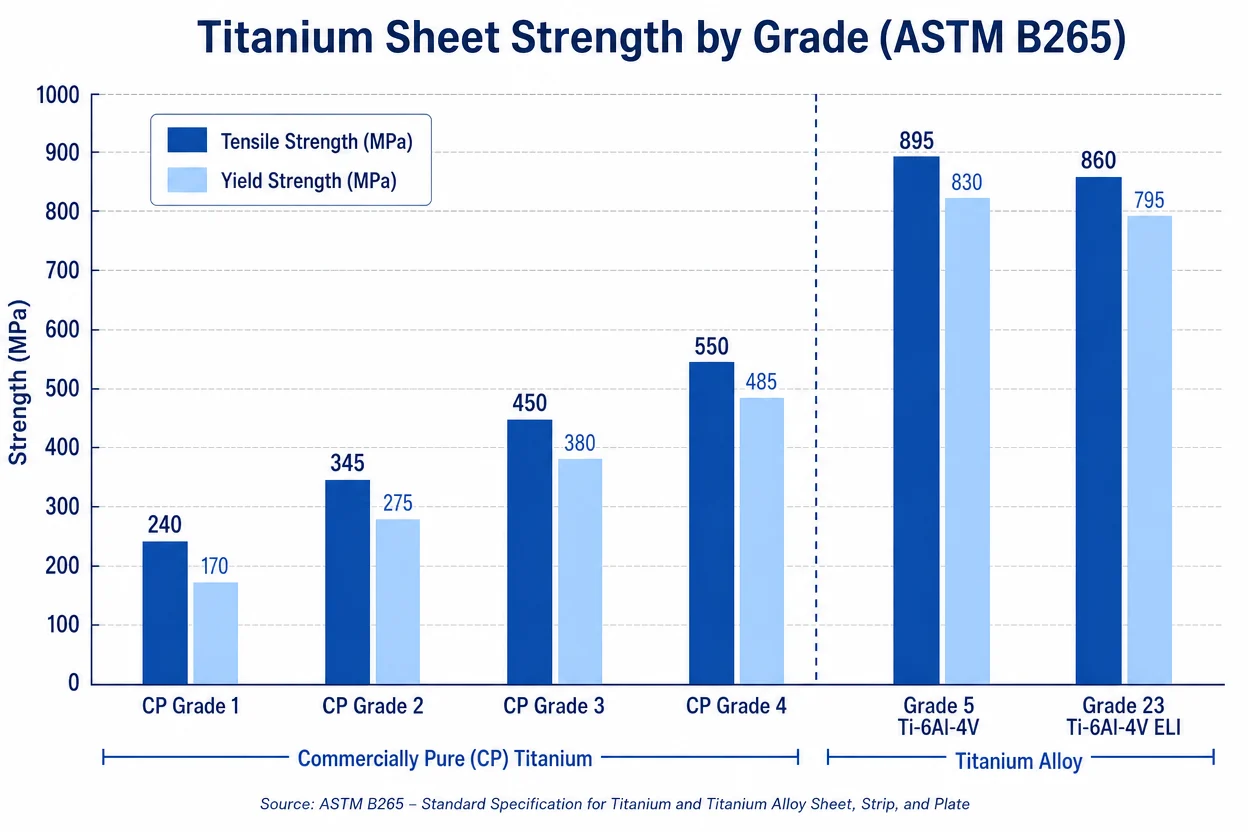
The most critical section for any engineer evaluating titanium sheets — here are the numbers you actually need.
CP (Commercially Pure) Titanium Sheets
| Property | Grade 1 | Grade 2 | Grade 3 | Grade 4 |
|---|---|---|---|---|
| Tensile Strength (min) | 240 MPa (35 ksi) | 345 MPa (50 ksi) | 450 MPa (65 ksi) | 550 MPa (80 ksi) |
| Yield Strength (0.2% offset) | 170 MPa (25 ksi) | 275 MPa (40 ksi) | 380 MPa (55 ksi) | 480 MPa (70 ksi) |
| Elongation at Break | 24% | 20% | 18% | 15% |
| Density | 4.51 g/cm³ | 4.51 g/cm³ | 4.51 g/cm³ | 4.51 g/cm³ |
| Elastic Modulus | 103–105 GPa | 103–105 GPa | 103–105 GPa | 105 GPa |
| Hardness (Vickers) | 120 | 150 | 200 | 280 |
Source: ASTM B265, MatWeb ASM Data Sheets
What this means in practice: Grade 1 is ideal when you need to form complex shapes — deep drawing, severe bending — and can’t tolerate cracking. Grade 4 is the workhorse when you need CP titanium’s corrosion resistance at the highest available strength. Most industrial chemical processing equipment uses Grade 2, which hits the sweet spot of moderate strength and excellent formability.
Titanium Alloy Sheets
| PropertyGrade 5 (Ti-6Al-4V)Grade 9 (Ti-3Al-2.5V)Grade 23 (Ti-6Al-4V ELI) | |||
|---|---|---|---|
| Tensile Strength (min) | 895 MPa (130 ksi) | 620 MPa (90 ksi) | 860 MPa (125 ksi) |
| Yield Strength (0.2% offset) | 828 MPa (120 ksi) | 483 MPa (70 ksi) | 795 MPa (115 ksi) |
| Elongation at Break | 10% | 15% | 10% |
| Density | 4.43 g/cm³ | 4.48 g/cm³ | 4.43 g/cm³ |
| Elastic Modulus | 113.8 GPa | 105 GPa | 110 GPa |
| Fatigue Strength (10⁷ cycles) | ~510 MPa | ~400 MPa | ~500 MPa |
Source: ASM International, MatWeb, Carpenter Technology Data Sheets
Critical distinction: Grade 5 (Ti-6Al-4V) is the global standard for high-strength titanium sheet — it accounts for roughly 50% of all titanium used worldwide. Grade 9 (Ti-3Al-2.5V) is essentially a “baby Grade 5” — easier to form, lower cost, and perfectly adequate for many applications. Grade 23 (ELI = Extra Low Interstitial) is the medical-grade variant with reduced oxygen content for better biocompatibility.
Note on ASTM B265 vs. typical values: The minimum strength values per ASTM B265 for Grade 5 sheet are 895 MPa tensile / 828 MPa yield. Published data sheets (e.g., MatWeb) often report higher typical values (950/880 MPa) for annealed bar stock. When specifying sheet, always reference the ASTM B265 minimums — they represent guaranteed performance, not averages.
Titanium vs Steel vs Aluminum: Strength Comparison
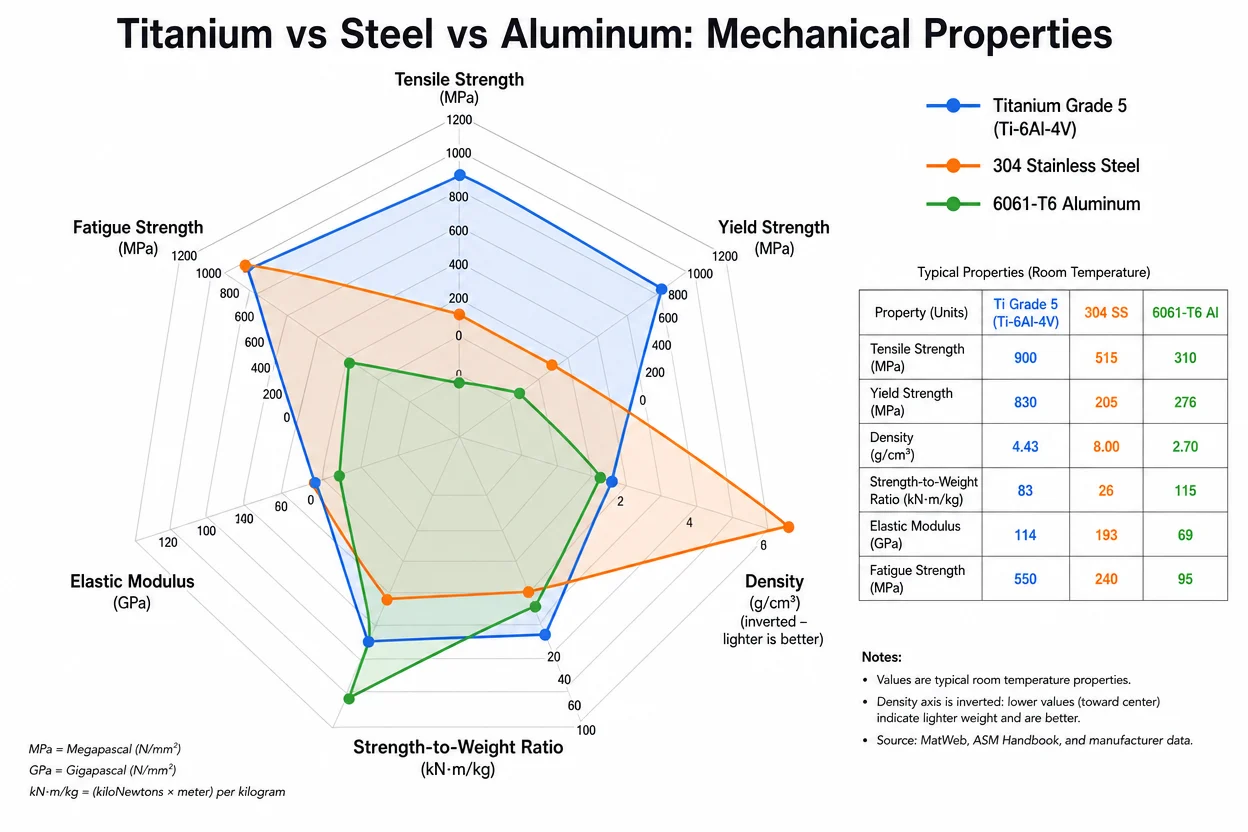
Titanium’s real advantage isn’t being “stronger” than steel — it’s being almost as strong at nearly half the weight.
Head-to-Head Mechanical Properties
| Property | Titanium (Grade 5) | 304 Stainless Steel | 6061-T6 Aluminum |
|---|---|---|---|
| Tensile Strength | 895 MPa (min) | 505 MPa | 310 MPa |
| Yield Strength | 828 MPa (min) | 215 MPa | 276 MPa |
| Density | 4.43 g/cm³ | 8.00 g/cm³ | 2.70 g/cm³ |
| Strength-to-Weight Ratio | 202 kNm/kg | 63 kNm/kg | 115 kNm/kg |
| Elastic Modulus | 114 GPa | 193 GPa (stainless) | 69 GPa |
| Melting Point | 1,668°C | 1,400–1,450°C | 660°C |
Sources: MatWeb, Ulbrich, AZoM
The strength-to-weight story: Titanium sheets weigh about 57% less than steel sheets of the same thickness while maintaining comparable or superior strength. This means a titanium component can deliver the same load-bearing capacity as steel at roughly half the weight. That’s not marketing — that’s basic density math: 4.43 g/cm³ vs 7.85 g/cm³.
But here’s the nuance most articles miss: Steel has a higher elastic modulus (193 GPa for stainless, ~200 GPa for carbon steel vs 114 GPa for titanium), meaning steel resists elastic deformation more effectively. In stiffness-critical designs (not just strength-critical), titanium may require thicker sections to match steel’s deflection resistance, partially offsetting the weight savings.
Titanium Sheet Fatigue Strength: The Overlooked Property
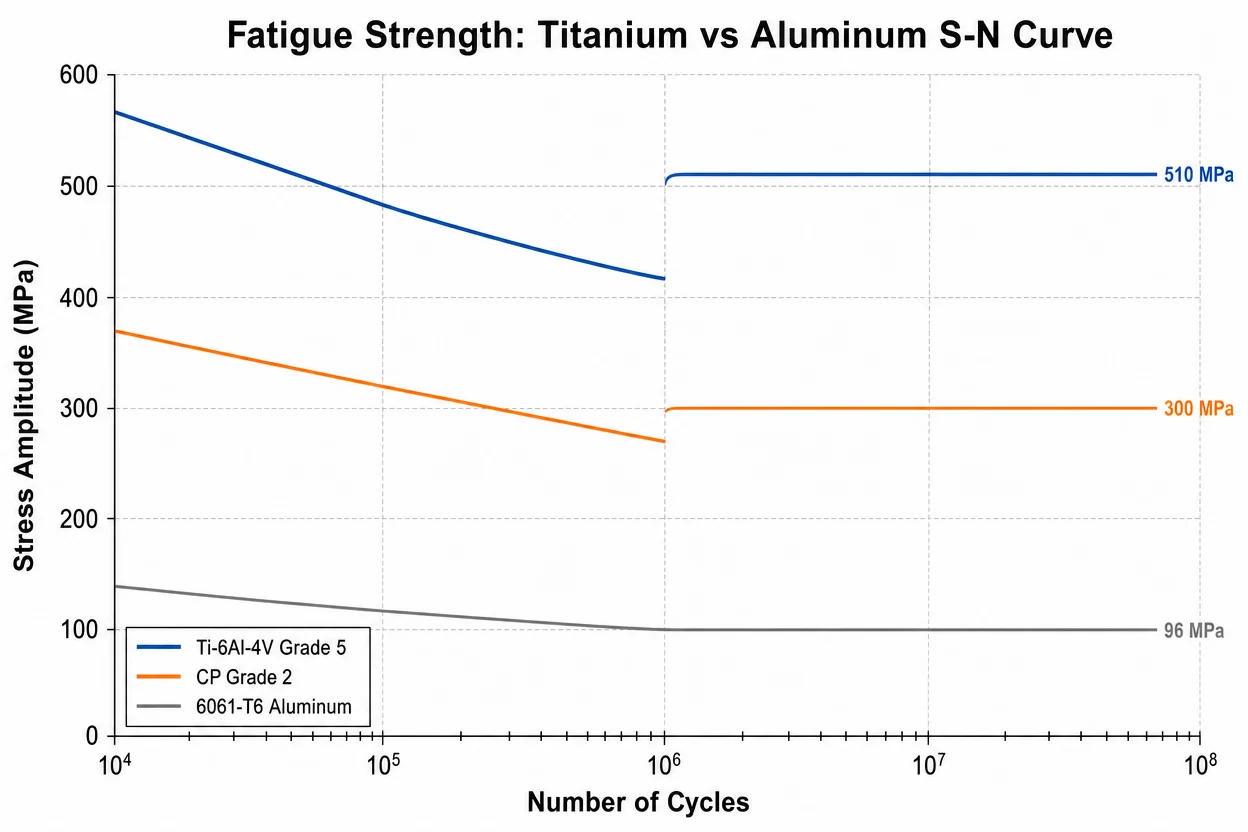
If your application involves repeated loading — cyclic stress, vibration, thermal cycling — fatigue strength is arguably more important than tensile strength.
Fatigue failure is how most structural metals actually fail in service. A titanium sheet that can handle 895 MPa once might fail at 250–400 MPa if that load is applied millions of times. Here’s what the fatigue data looks like:
| Material | Fatigue Strength (10⁷ cycles) | Notes |
|---|---|---|
| Ti-6Al-4V (Grade 5) | 510 MPa (74 ksi) | Highest fatigue strength of common titanium grades |
| CP Grade 2 | 300 MPa (44 ksi) | At 10⁷ cycles, unnotched |
| CP Grade 4 | 250 MPa (36 ksi) | At 10⁷ cycles, Kt=1 |
| 304 Stainless Steel | ~240 MPa | Much lower than titanium alloys |
| 6061-T6 Aluminum | ~96 MPa | Significantly lower than both titanium and steel |
Sources: MatWeb ASM Data Sheets (Ti-6Al-4V: btp641, Grade 2: mtu020, Grade 4: mtu040)
First-hand observation: In applications where I’ve seen titanium sheets outperform steel isn’t necessarily in the initial strength test — it’s after years of cyclic loading where the titanium component shows no degradation while steel equivalents develop fatigue cracks. This is particularly noticeable in marine environments where fatigue corrosion (corrosion fatigue) accelerates failure in steel.
Why titanium excels at fatigue: The combination of high strength, low elastic modulus, and excellent corrosion resistance creates a “triple advantage” for fatigue. The lower modulus means lower strain amplitude at a given stress level, directly extending fatigue life. The corrosion resistance prevents surface pitting that typically initiates fatigue cracks in steel.
Real-World Applications: Where Titanium Sheet Strength Matters
Theory is useful; application is what actually drives purchasing decisions.
Aerospace (Highest Strength Requirements)
Aircraft manufacturers use Grade 5 titanium sheets for wing-to-body junction panels, engine nacelles, and structural floor beams. The Boeing 787 Dreamliner contains approximately 15% titanium by weight — mostly in sheet form. These components experience extreme cyclic loading during pressurization cycles, requiring the combination of high tensile strength and fatigue resistance that only Grade 5 can provide.
Typical specification: AMS 4911 for Ti-6Al-4V sheet, 0.5–4.75mm thickness, annealed condition.
Medical Implants (Strength + Biocompatibility)
Grade 23 (Ti-6Al-4V ELI) sheets are formed into orthopedic implant components — hip stems, spinal fusion cages, dental implant abutments. The “ELI” designation means reduced oxygen and iron content, improving fracture toughness and fatigue life in the body’s corrosive environment. A femoral stem component may experience 1–2 million loading cycles per year.
Typical specification: ASTM F136 (Grade 23) or ASTM F1472.
Chemical Processing (Corrosion + Moderate Strength)
Grade 2 titanium sheets dominate chemical processing equipment — heat exchanger shells, reactor vessels, scrubber internals. Here, the priority is corrosion resistance in aggressive media (chlorides, organic acids, seawater), but Grade 2’s 345 MPa tensile strength is more than sufficient for pressure vessel applications.
Typical specification: ASTM B265 Grade 2, often with ASME Section VIII pressure vessel code compliance.
Power Generation
Condenser and heat exchanger tubes in power plants increasingly use Grade 2 titanium sheet, particularly in coastal facilities using seawater cooling. The 40+ year service life in seawater (compared to 5–10 years for copper-nickel alloys) justifies the higher initial material cost.
Why “Stronger Than Steel” Is an Oversimplification
Titanium isn’t unconditionally stronger than steel — it’s conditionally stronger in ways that matter.
The claim that “titanium is stronger than steel” appears in almost every article about titanium, and it’s technically misleading. Here’s what the data actually shows:
- Grade 5 titanium (895 MPa tensile per ASTM B265) is stronger than mild steel (400–550 MPa) but comparable to or weaker than high-strength low-alloy (HSLA) steel (550–750 MPa) and quenched & tempered steel (1,000–1,500+ MPa)
- CP Grade 2 titanium (345 MPa tensile) is actually weaker than most structural steel grades
- The real titanium advantage is the specific strength (strength-to-weight ratio), not absolute strength
Specific strength comparison:
| Material | Tensile Strength (MPa) | Density (g/cm³) | Specific Strength (MPa·cm³/g) |
|---|---|---|---|
| Ti-6Al-4V (Grade 5) | 895 | 4.43 | 202 |
| Grade 2 CP | 345 | 4.51 | 77 |
| 304 Stainless Steel | 505 | 8.00 | 63 |
| 4130 Q&T Steel | 1,000+ | 7.85 | 127+ |
| 6061-T6 Aluminum | 310 | 2.70 | 115 |
The honest answer: If absolute strength is all that matters and weight is irrelevant, use high-strength steel. If strength per unit weight matters — aerospace, mobility, portable structures — titanium wins decisively.
How Thickness Affects Titanium Sheet Strength
Sheet thickness introduces variables that raw material data sheets don’t capture.
Most titanium data sheets cite properties for standardized specimen sizes. In practice, sheet thickness affects measured strength through several mechanisms:
- Grain size effects: Very thin sheets (below 0.5mm) can exhibit higher yield strength due to grain size constraints — when the ratio of thickness to grain size drops below 5, the Hall-Petch effect increases yield strength but reduces ductility.
- Texture effects: Cold-rolled titanium sheets develop crystallographic texture that creates directional differences in strength. Properties measured parallel to the rolling direction can differ from those measured transverse to rolling by 5–15%.
- Surface condition: Thin sheets have a higher surface-area-to-volume ratio, making surface defects proportionally more significant for fatigue life. Shot peening or chemical milling can dramatically improve thin sheet fatigue performance.
Practical guidance: For thicknesses between 0.5mm and 3.0mm, published minimum properties in ASTM B265 are reliable. For ultra-thin sheets (<0.5mm) or very thick plates (>50mm), request certified test data from your supplier — the standard minimums may not reflect actual measured values.
The Cost-Strength Equation: Is Titanium Sheet Worth It?
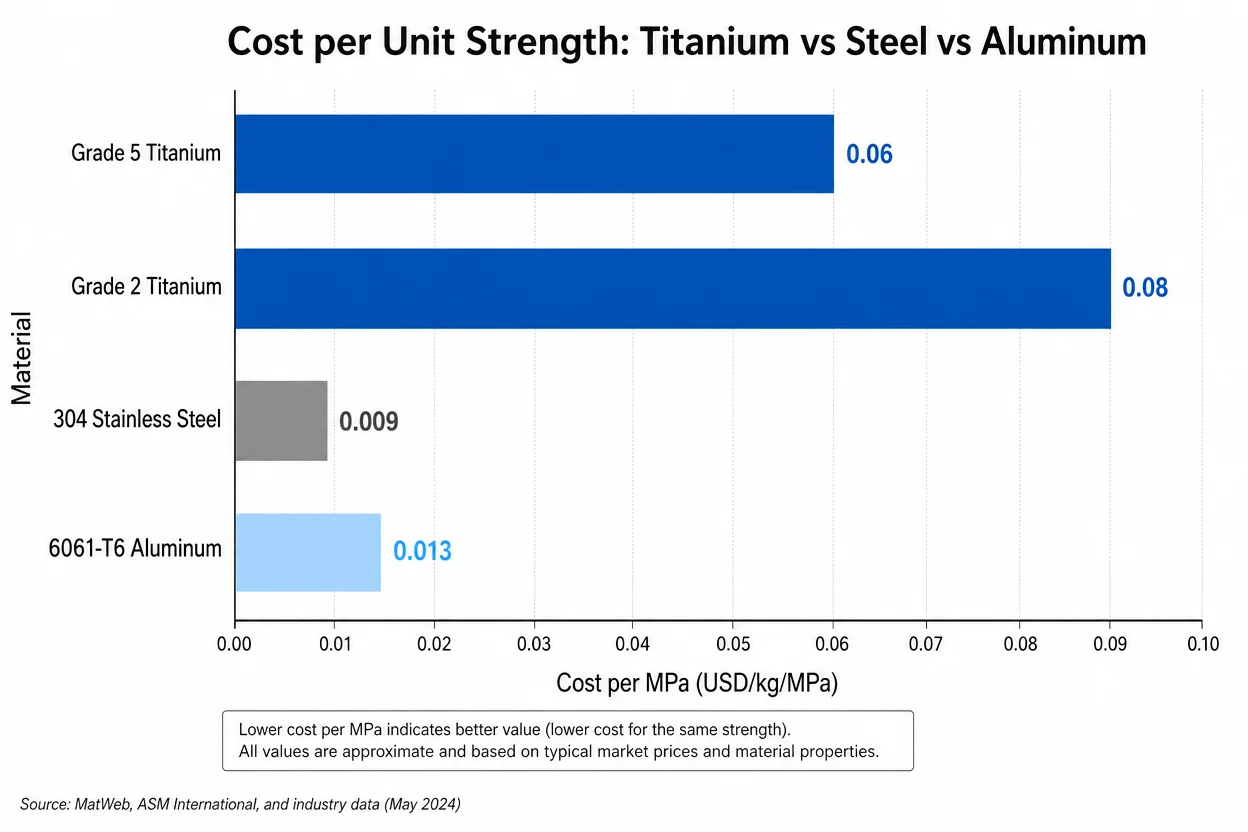
Titanium’s strength is rarely the question — the cost is.
Titanium sheet pricing (as of 2026) varies significantly by grade and specification:
| Grade | Approximate Price (USD/kg) | Tensile Strength | Cost per MPa (USD/kg/MPa) |
|---|---|---|---|
| Grade 1 CP | $25–40 | 240 MPa | 0.10–0.17 |
| Grade 2 CP | $20–35 | 345 MPa | 0.06–0.10 |
| Grade 5 (Ti-6Al-4V) | $35–80 | 895 MPa | 0.04–0.09 |
| Grade 23 (ELI) | $50–100 | 860 MPa | 0.06–0.12 |
| 304 Stainless Steel | $3–6 | 505 MPa | 0.006–0.012 |
| 6061-T6 Aluminum | $3–5 | 310 MPa | 0.010–0.016 |
Note: Titanium prices based on 2026 market data (Trading Economics, IMARC). Prices vary by region, supplier, and order volume.
What this means: Grade 5 titanium costs roughly 6–13 times more per unit strength than stainless steel. However, when you factor in weight savings (potentially reducing structural mass by 40–50%), lifecycle costs (no corrosion maintenance), and service life (40+ years in corrosive environments), the total cost of ownership can favor titanium in the right applications.
The real cost driver: Titanium sheet fabrication costs often exceed raw material costs by 2–5x. Titanium is harder to cut, bend, and weld than steel — requiring specialized tooling, slower feed rates, and inert atmosphere welding. Budget accordingly.
How to Choose the Right Titanium Sheet Grade
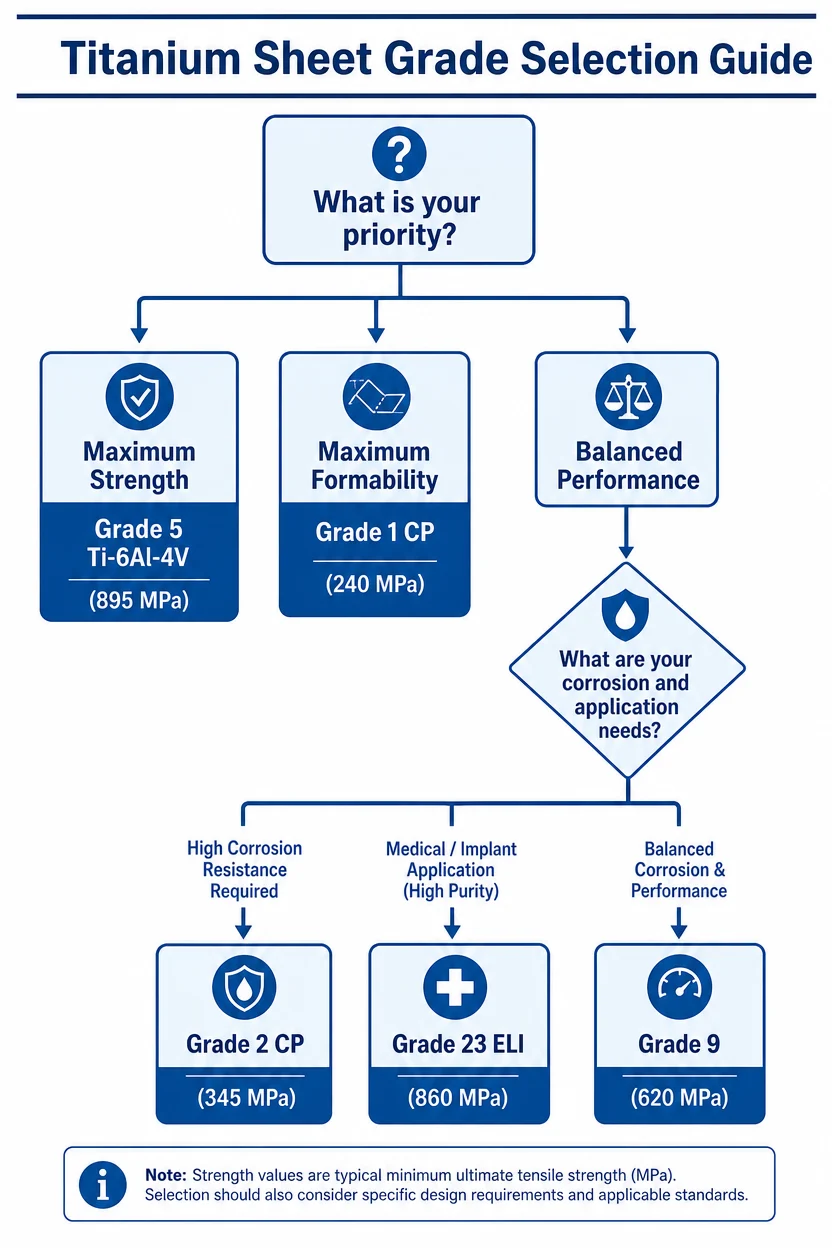
The grade selection decision comes down to three questions: What strength do you need? What environment will it face? What’s your forming requirement?
Quick Selection Guide
Need maximum strength? → Grade 5 (Ti-6Al-4V)
- Tensile: 895 MPa, Yield: 828 MPa (per ASTM B265)
- Best for: Aerospace structures, high-load applications
- Forming: Requires hot forming for tight radii
Need moderate strength + excellent corrosion resistance? → Grade 2 CP
- Tensile: 345 MPa, Yield: 275 MPa
- Best for: Chemical processing, marine, desalination
- Forming: Excellent cold formability
Need maximum formability? → Grade 1 CP
- Tensile: 240 MPa, Yield: 170 MPa
- Best for: Deep drawing, complex geometry, heat exchangers
- Forming: Best cold formability of all titanium grades
Need medical-grade biocompatibility? → Grade 23 (Ti-6Al-4V ELI)
- Tensile: 860 MPa, Yield: 795 MPa
- Best for: Implants, surgical instruments
- Forming: Similar to Grade 5
Need a balance of strength and formability? → Grade 9 (Ti-3Al-2.5V)
- Tensile: 620 MPa, Yield: 483 MPa (per ASTM B265)
- Best for: Tubing, moderate-strength forming applications
- Forming: Cold formable (unlike Grade 5)
Standards Reference
| Grade | Sheet Standard | Rod/Bar Standard | Aerospace Spec |
|---|---|---|---|
| Grade 1 | ASTM B265 F26 | ASTM B348 F39 | AMS 4902 |
| Grade 2 | ASTM B265 F27 | ASTM B348 F40 | AMS 4918 |
| Grade 3 | ASTM B265 F28 | ASTM B348 F41 | — |
| Grade 4 | ASTM B265 F29 | ASTM B348 F42 | AMS 4901 |
| Grade 5 | ASTM B265 F147 | ASTM B348 F467 | AMS 4911 |
| Grade 23 | ASTM B265 F136 | ASTM B348 F1472 | AMS 4930 |
Frequently Asked Questions
What is the tensile yield strength of titanium?
The tensile yield strength of titanium depends entirely on the grade. CP Grade 1 titanium has a minimum yield strength of 170 MPa (25 ksi), while Grade 5 (Ti-6Al-4V) has a minimum yield strength of 828 MPa (120 ksi) per ASTM B265. Grade 2, the most commonly used CP grade, has a yield strength of 275 MPa (40 ksi). For alloy grades, Ti-10V-2Fe-3Al achieves the highest ultimate tensile strength of all titanium alloys at 1,260 MPa.
How much force does it take to break a titanium sheet?
This depends on sheet dimensions and grade. As a practical example: a 1mm thick Grade 2 titanium strip (25mm wide) requires approximately 860 N (193 lbf) of tensile force to break. A Grade 5 strip of the same dimensions requires approximately 2,240 N (503 lbf). These figures assume a standard tensile test specimen per ASTM B265.
Is titanium stronger than stainless steel?
Grade 5 titanium (895 MPa tensile) is stronger than most stainless steel grades (304 SS: ~505 MPa, 316 SS: ~515 MPa). However, CP Grade 1 titanium (240 MPa) is significantly weaker than stainless steel. The real titanium advantage is strength-to-weight ratio — titanium is 45% lighter than stainless steel while often matching or exceeding its strength.
What is the strongest titanium grade for sheet?
Grade 5 (Ti-6Al-4V) is the strongest commonly available titanium sheet grade, with a minimum tensile strength of 895 MPa per ASTM B265. For specialized aerospace applications, Ti-5553 (Beta alloy) can achieve tensile strengths up to 1,250 MPa, but this is rarely available in sheet form and is typically limited to forgings and thick plates.
How does titanium sheet thickness affect strength?
Standard minimum strength values in ASTM B265 are reliable for thicknesses between 0.5mm and 3.0mm. Very thin sheets (<0.5mm) may exhibit higher yield strength due to grain size constraints, but with reduced ductility. Very thick plates (>50mm) may show slightly lower properties due to slower cooling rates during production. Always request certified test data for critical applications.
Can you weld titanium sheets?
Yes, titanium sheets can be welded, but they require inert gas shielding (typically argon) to prevent oxygen contamination, which causes embrittlement. Grade 2 CP titanium has excellent weldability, while Grade 5 requires more careful process control. TIG (GTAW) welding is the standard process for titanium sheet. Welded joint strength can reach 90–100% of base metal strength when properly executed.
Summary
After years of specifying titanium sheets for industrial applications, here’s what I’ve learned: titanium’s strength is real, but it’s nuanced. The number on the datasheet tells only part of the story.
If you need a single takeaway: Grade 5 titanium sheet (Ti-6Al-4V) delivers 895 MPa tensile strength (per ASTM B265) at roughly half the weight of steel — but it costs 6–13 times more per unit strength. The value proposition shifts dramatically when you factor in corrosion resistance, fatigue life, and total lifecycle cost.
The questions I always ask when a client wants to use titanium:
- Does the application genuinely need titanium’s unique strength-to-weight ratio, or would high-strength steel do the job?
- What’s the expected service life in the operating environment? (Titanium’s value increases with time)
- Are fabrication costs budgeted realistically? (The sheet is only part of the total cost)
- Is the correct grade specified for the actual loading conditions? (Many engineers default to Grade 5 when Grade 2 would suffice)
Titanium sheet isn’t universally “the strongest” — it’s the most efficient choice when strength, weight, and durability must all be optimized simultaneously. For applications that demand all three, nothing else comes close.