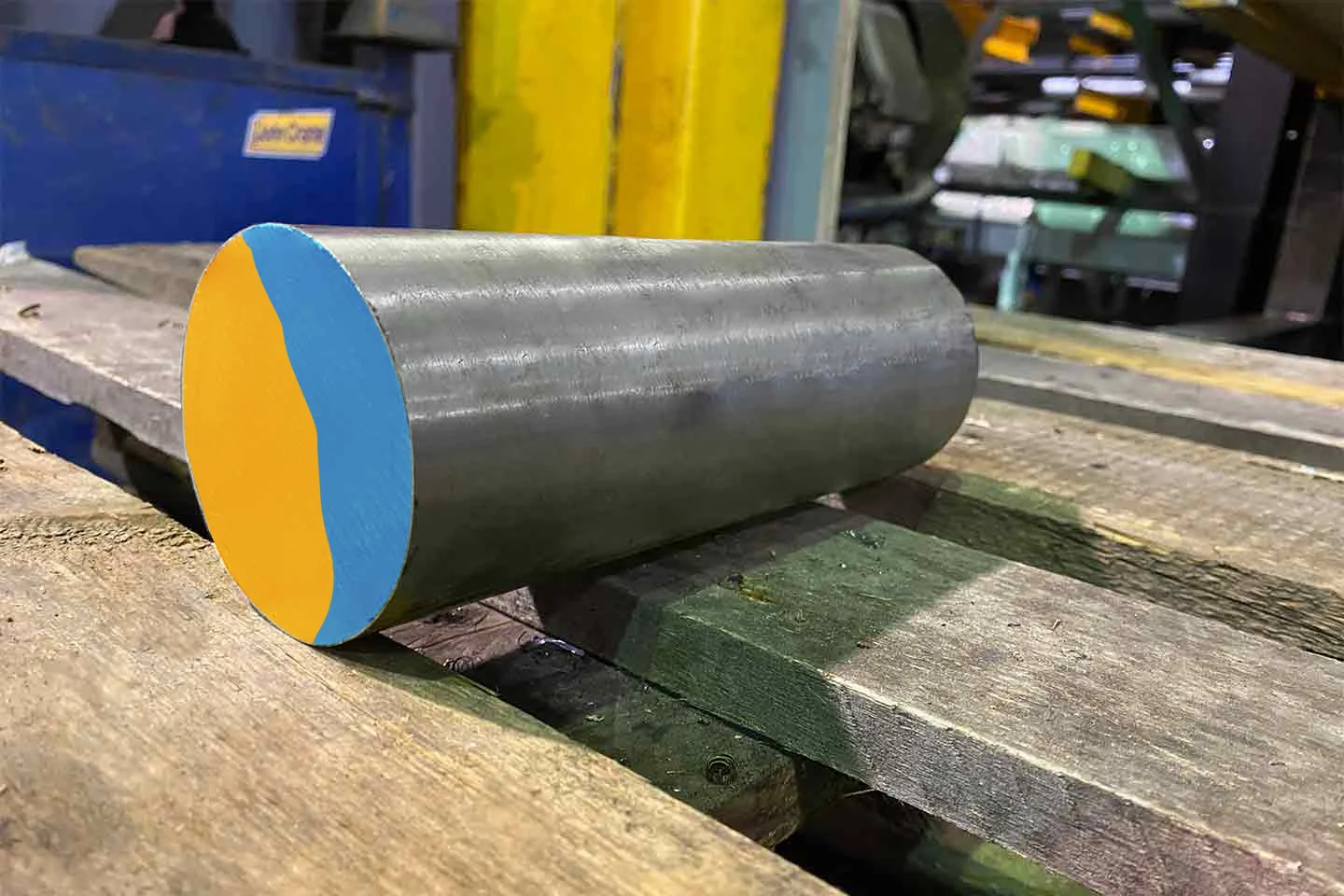
Titanium Heat Treatment: Annealing Temperatures, STA, and Stress Relief by Grade

Titanium heat treatment varies significantly by alloy grade. Commercially pure (CP) grades 1–4 can only be annealed (538–760°C / 1000–1400°F) and stress-relieved—they cannot be strengthened by heat treatment. Grade 5 (Ti-6Al-4V), the most widely used alloy, can be annealed at 691–760°C (1275–1400°F) or solution treated at 913–954°C (1675–1750°F) and aged

Read More »

Are Titanium Pans Safe? What I Found After Testing Both Types

Pure titanium pans are among the safest cookware available — zero PFAS, no coatings to degrade, and biocompatible enough to use in surgical implants. But most pans sold as “titanium” aren’t pure titanium at all. They’re PTFE nonstick coatings with titanium particles mixed in for scratch resistance. Whether those are

Read More »

Titanium vs Wood Cutting Board: What Independent Tests Actually Show

Titanium cutting boards look impressive and clean up in seconds, but independent BESS sharpness testing shows they dull knives roughly 30 times faster than end-grain walnut — a 444-point loss vs. 15 points. Wood’s bacteria story is also more nuanced than titanium marketing admits: a peer-reviewed 1994 study found wood

Read More »

Titanium Thermal Conductivity: Why It’s Low and When That Matters

Titanium thermal conductivity is approximately 21.9 W/m·K at room temperature — roughly 1/18th that of copper (401 W/m·K) and 1/11th that of aluminum (237 W/m·K). In pure thermal conductivity terms, titanium is a poor heat conductor. But that single number tells an incomplete story. Titanium’s combination of low thermal conductivity, high

Read More »

Titanium Surface Finishing & Polishing: A Practical Engineering Guide for 2026

Quick Summary: Titanium surface finishing encompasses mechanical polishing, chemical polishing, electropolishing, anodizing, passivation, and advanced coatings—each serving distinct performance and aesthetic goals. This guide covers complete grit progressions, Ra value specifications by industry, alloy-specific procedures, and a decision framework for selecting the right finishing method based on application, budget, and compliance

Read More »
PDF

Send Your Inquiry Today